Mixing coolant and antifreeze requires careful attention, as using different products can create confusion, potential risks, and lead to damage that may occur inside your engine. This guide highlights the essential dos and donts to keep your car safe while ensuring recommended practices for optimal performance across various types. Read before you top up the tank and understand what you need to avoid considerable problems.
Table of Contents
What Are the Different Types of Coolant for Your Car?
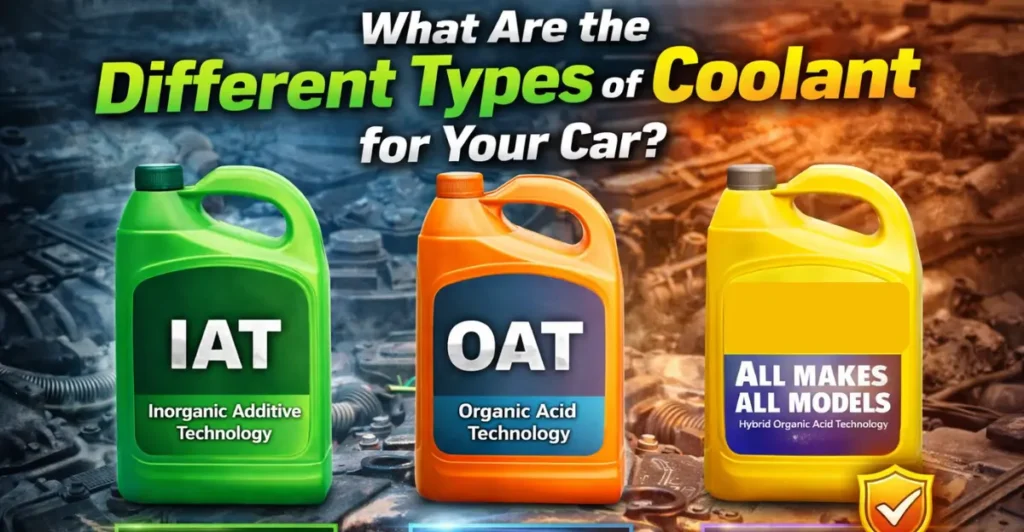
Understanding coolant and antifreeze starts with recognizing the different types available for your car, as choosing the right product is trickier than it seems.
Historically, coolants came in red, blue, or green colours, each with a specific formula and ingredients, but today the range includes orange, pink, and newer, advanced, premium variants.
They are generally divided into separate camps like organic acid technology (OAT), inorganic additive (IAT), and hybrid blends, each based on chemical compounds that make up the products to offer corrosion, heat protection, and incredible longevity over miles. Mixing the wrong brands or types can reduce cooling system efficiency, so learn from guides and choose the right product for your vehicle and its original specifications.
In my experience, identifying the colour and type before topping up has saved countless engines from considerable damage and ensured smooth performance for years.
From my time working with various brands like Prestone and other premium lines, I’ve seen firsthand that following the original formula rather than experimenting with mixes keeps engines healthy and avoids expensive repairs.
Can You Mix Different Coolants?
Mixing different coolants in your car’s cooling system is a risk that many drivers underestimate, and it is important to know that combining IAT and OAT types together can result in a gelatinous substance that blocks passages and causes widespread damage to internal components.
Do not assume that coolant colour alone is enough to distinguish safe mixes, as many instances show that the wrong type added to a system can make it incredibly difficult to drain, flush, or top up with safe fluid.
The simplest, easiest thing is to use Prestone or other high-performance products with patented formula guaranteed compatible with all engines, offering long-lasting protection against wear, corrosion, and extreme temperatures, saving time and avoiding the catastrophic results of guessing whether fluids are currently safe to mix.
Unless you are absolutely sure or able to take the system to a mechanic, the fact remains that spending a few extra minutes checking compatibility is far better than facing real danger.
From my experience, I once witnessed a car suffer internal damage because a driver ignored fluid types and added different coolants, and after a costly drain and flush, the engine performance slowly recovered, proving how critical compatibility is for long-lasting protection.
Mixing and Using Coolant/Antifreeze: Dos and Don’ts to Remember
When mixing and using coolant or antifreeze, it’s crucial to follow the dos and donts to remember the key steps that keep your car protected. Always set a routine for checking products before topping up, and make sure to avoid mistakes that can cause problems. By staying consistent and cautious, you get reliable performance and always maintain a safe and efficient cooling system.
Dos
- Always refer to your car owners manual before topping up the cooling system.
- It is important to use the right type of coolant or antifreeze to ensure optimal engine protection and longevity.
- Check coolant level often and monitor oil and other fluid levels against the max marker to stay prepared and top off whenever necessary.
- Regularly flush the cooling system according to the line change interval of the chosen product rather than just removing the old fluid.
- Keep internal components in the best possible condition for long-term performance.
Don’ts
- Avoid buying new coolant or antifreeze solely based on colour without considering the existing fluid and outlined coolants compatibility.
- Longer-used systems may be classified differently, so knowing whether the right product is in place is key.
- Never mix OAT and IAT unless absolutely sure they are compatible, as results can be horrendous with potential significant damage and a steep repair bill.
- Do not put off changing or topping due to fear, or mixing together incompatible fluids.
- If in doubt, reach for Prestone with guaranteed compatibility, offering excellent, long-term results for your engine.
From my experience, following these dos has kept engines running smoothly for years, while ignoring the don’ts often leads to costly repairs that could have been easily avoided.
Conclusion
Following the essential dos and avoiding the critical don’ts of mixing and using coolant or antifreeze keeps your car’s engine protected and ensures optimal performance. Regular checks, proper flushing, and using the right products prevent costly damage and extend the life of your cooling system. Stay vigilant, top up responsibly, and maintain long-term protection for worry-free driving.
FAQs
Can I mix different colors of coolant if they look similar?
Generally, no. While color used to be a reliable indicator of chemical type, modern manufacturers use a variety of colors (green, orange, pink, blue, etc.) that don’t always match between brands. Mixing different technologies, like Inorganic Additive Technology (IAT) and Organic Acid Technology (OAT), can cause a chemical reaction that creates a thick, gel-like sludge, potentially clogging your radiator and causing the engine to overheat.
What happens if I use only water instead of a coolant mix?
Using only water is highly discouraged except in an absolute emergency. Water lacks the necessary additives to prevent rust and corrosion, and it has a lower boiling point and higher freezing point than a proper 50/50 mix. This increases the risk of your engine overheating in summer or the engine block cracking in winter.
How often should I check and change my coolant?
Most traditional coolants (green) should be changed every 2 to 3 years or 30,000 miles. Newer, “extended-life” coolants (often orange or pink) can last up to 5 years or 100,000 miles