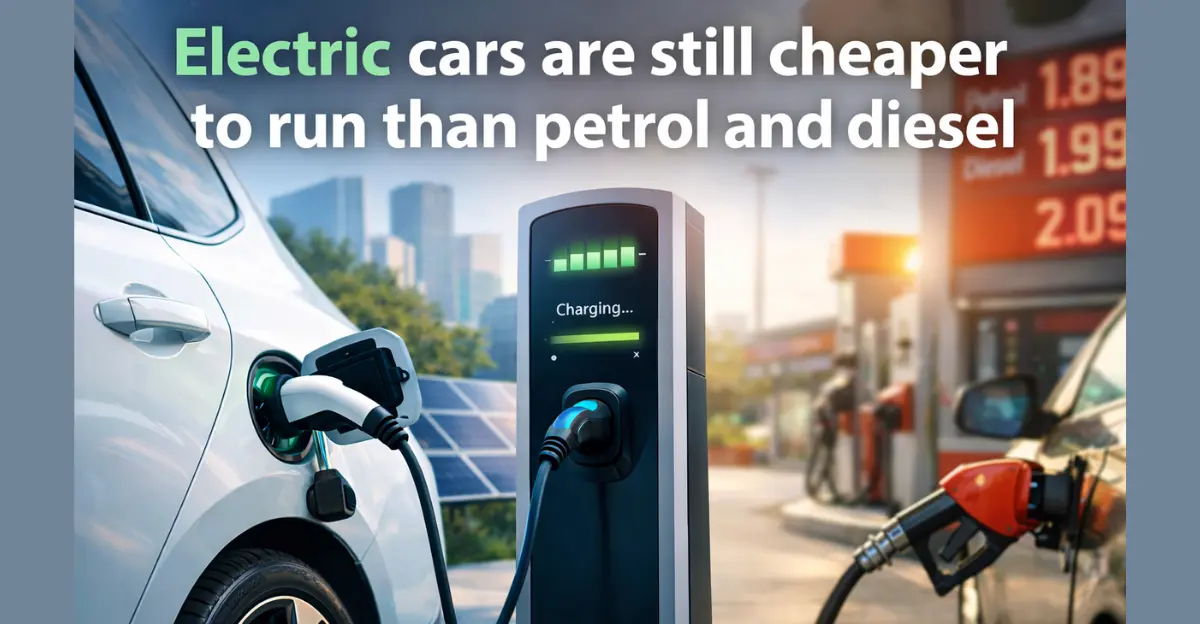
Fuel prices have soared, yet choosing to recharge an EV instead of stopping at a fuel pump to refuel remains noticeably cheaper, driven by more stable electricity costs. This change reflects a practical shift toward predictable running expenses and greater control over everyday vehicle spending. Discover how electric driving reshapes ownership economics and start optimizing your transport costs today.
Table of Contents
Cheaper Running Costs
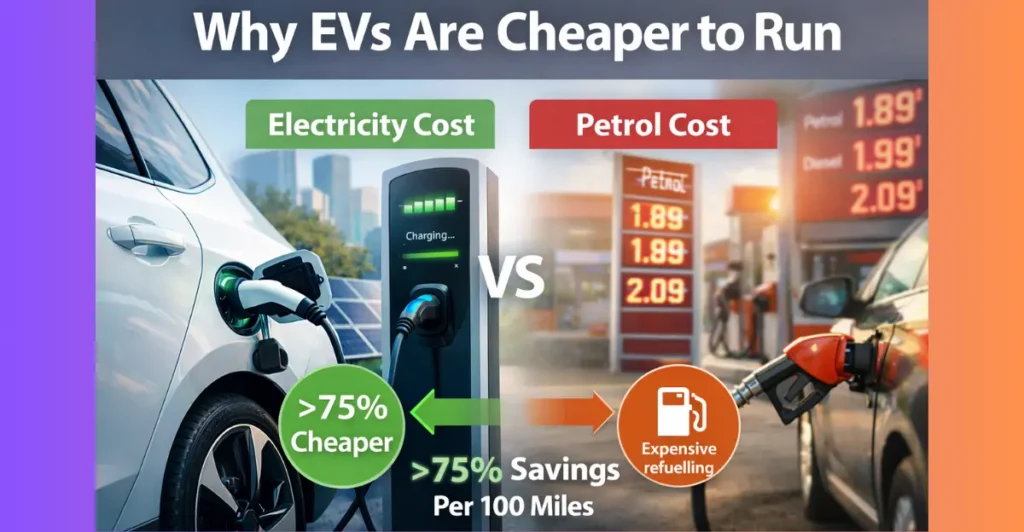
The overall cost to own and run electric cars remains significantly cheaper than petrol or diesel vehicles, thanks to lower recharging expenses compared to refuelling at the pump.
Even with the recent energy crisis caused by the Russia-Ukraine invasion, which affected gas supplies and power generation across European countries, electricity prices for households have stayed comparatively stable.
Governments have been actively subsidising EV batteries and fuel costs since September, helping the average EU household manage kWh consumption despite staggering and unprecedented surges in oil supply and rising fears of shortages during high, cold winter months.
The irrefutable fact is that owning an electric vehicle over a couple of years drastically lowers running expenses, offering more predictable and manageable costs than traditional fuel vehicles.
For anyone predicting the transition to emobility, investing in electric cars shields against sudden halt in fuel supplies and unexpected spikes in fuel prices, making it a financially smart choice for modern vehicle ownership.
From personal experience managing EV ownership during periods of soaring oil and gas prices, I’ve seen firsthand how electric cars consistently reduce monthly pay for energy, and recharging at home saves far more than refuelling ever did. The peace of mind during cold winter spikes in Europe is unmatched.
Why EVs Are Cheaper to Run
The facts around recharging EVs show that in today’s market, the average cost to charge at home, work, or private charge points is significantly cheaper than refuelling petrol or diesel cars, making EVs more practical for everyday use.
Following the Russian invasion of Ukraine, fuel prices in European countries experienced an initial spike, but massive subsidies from the European Commission helped reduce prices back down toward precrisis levels, stabilizing costs for consumers and highlighting the role of government intervention in energy markets.
Using superfast chargers on busy motorways or AC charging can still be expensive, but monthly and yearly subscription models for charging further lower the running cost, while charging at home or work remains usually the cheapest mode, often covering 80 per cent or more of the energy used.
This straightforward reason makes EVs worth considering for long term ownership, especially when bearing in mind that electricity costs are a fraction of what you would pay to refuel a car with petrol or diesel, even amid unprecedented market distortion.
From personal experience, managing EVs charged mostly at home and occasionally on superfasta motorway chargers has shown me that monthly running costs are dramatically lower than traditional fuel, and planning trips around private and work charging points makes ownership effortless and predictable.
Why Electric Cars Save on Running Costs
When driving the same distance, electric cars are consistently cheaper to run than petrol or diesel cars, even though electricity prices in some countries like Italy, Germany, Spain, and Poland rank among the highest in Europe.
The analysis based on average running costs shows that recharging EVs during offpeak hours at night or using renewable energy sources remains the cheapest way for consumers to save money.
Refuelling a car with fossil fuels is increasingly expensive and staggering, especially given current price hikes, overreliance on gas, and unpredictable geopolitical events like the Russian invasion, which have disrupted supply and emphasized the need for energy security.
Even the marginal differences in cost highlight how plugging in at home or in the city during day or night makes drivers more in control of their monthly expenses.
This approach brings down long term running costs while reducing dependence on fossil fuels, making electric cars not only economical but also better for the environment.
From personal experience, scheduling recharging during offpeak hours at home and occasionally using medium speed public chargers has made running electric cars predictable, with monthly savings clearly visible compared to my petrol and diesel vehicles.
Conclusion
Switching to electric cars is a powerful way to save on running costs while avoiding the staggering expenses of petrol and diesel. With electricity prices more stable than volatile fuel markets, EVs ensure predictable monthly and yearly savings. Start recharging smarter today and enjoy a cleaner, cheaper, and more sustainable driving experience.
FAQS
Is it cheaper to run an electric car than petrol?
Diesel: Around 13–16p per mile, slightly cheaper on motorways if driving efficiently. That means EVs charged at home are still around 50% cheaper per mile than petrol or diesel.
What is the 80% rule for EV?
As a rule of thumb, never let your EV’s charge dip below 20%. Similarly, when charging, fight the urge to go for a full charge. Charge your car to 80% for minimal strain and extended EV car battery life.