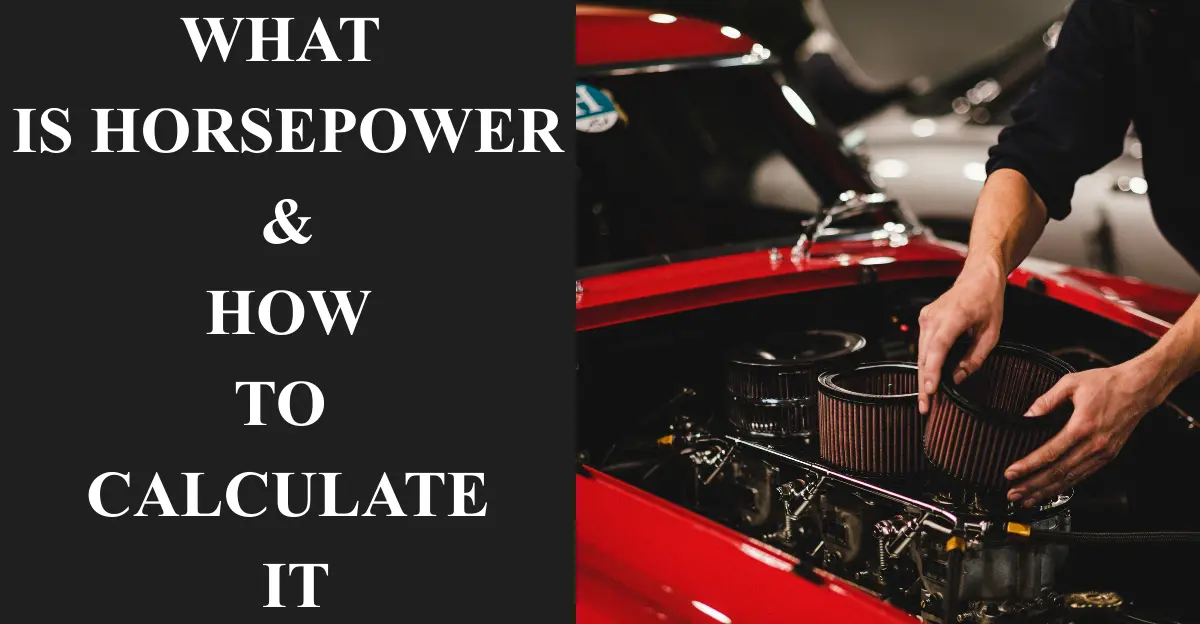
Unlock the true potential of your car by understanding horsepower, the key number that defines how much power an engine can develop. Learning how it’s measured and the method of calculating HP empowers confident decisions when buying a new car. Discover exactly how much horsepower your engine delivers and enhance every drive with performance you can feel.
Table of Contents
What is Horsepower?

Horsepower is a metric of power that an engine produces, originally coined in the 18th century by Scottish inventor James Watt to describe the capability of steam engines compared to horses. The phrase helped early machines like grain mills communicate their strength to potential investors, showing the relation between a horse’s efficiency and a machine’s work rate.
In layman’s terms, one HP is the measurement of the rate needed to move 550 pounds one foot in one second, roughly able to lift a quarter of a tonne. Mathematicians developed calculations to standardize this invention, making it easier to understand the true power behind machines.
From my personal experience working with multiple engines, understanding horsepower in HP allows a real sense of what a car produces, far beyond the figures on paper. It gives enthusiasts and buyers insight into the rate of power that translates directly into driving performance, making every ride feel more informed and precise.
How Does Horsepower Affect a Car’s Performance?
Horsepower plays a critical role in determining a car’s overall performance, influencing acceleration, how it handles challenging driving conditions, and the speed it can maintain. The power an engine produces allows vehicles with higher horsepower to accelerate quickly, making overtaking on the motorway or merging into highways effortless.
Adequate horsepower is necessary for vehicles that tow heavy loads like heavier trailers or boats, preventing drivers from struggling during daily commuting, on steep inclines, or across difficult terrain. Vehicles with insufficient horsepower often feel underpowered and can overwork the engine in demanding situations.
With my years of experience testing various cars, I’ve seen how maintaining power without overworking the engine ensures swift performance and robust towing capability. Understanding the demands of horsepower helps match the right vehicle to the driver’s needs, delivering confidence, efficiency, and reliability on every drive.
How the Engine Can Affect Horsepower?
The engine is the heart of a vehicle and directly determines its power output with several factors in its design and configuration impacting the horsepower it can produce. Understanding these elements helps explain why even cars with similar engines can perform differently on the road.
Engine Size
Engine size is measured in litres and reflects the total volume of the engine’s cylinders. Larger engines with more cylinders can combust more fuel and air, providing increased capacity and resulting in higher horsepower. For example, a 4.0-litre engine can burn more fuel at a faster rate than a 2.0-litre engine which allows it to generate power more efficiently through each combustion cycle.
Engine Configuration
The engine configuration, meaning how the cylinders are arranged in a straight line, V-shape, or horizontally opposed, affects how smoothly the engine runs and influences horsepower. A V8 engine with eight cylinders split into two banks of four provides a balance of power and smoothness while a four-cylinder inline engine may enhance or restrict air flows, affecting power output differently.
Engine Design
Modern engine design incorporates features like valve timing, turbocharging, and variable valve timing to maximize horsepower. The precise opening and closing of engine valves across a range of speeds along with turbochargers or superchargers forcing more air into the engine’s cylinders allows more fuel to be burned and generating power efficiently.
From my experience tuning and testing multiple engines, I have observed that the combination of engine size, configuration, and design ultimately determines how a car performs on the road and delivers horsepower in real driving conditions.
What’s the Difference Between Horsepower, Brake Horsepower and Torque?
Horsepower is a metric used to express the power an engine produces in a general sense, reflecting its overall capacity to perform work such as accelerating or towing a trailer.
Brake horsepower, or BHP, accounts for potential losses in the engine, wheels, drivetrain, friction, and other components, representing the power delivered to the car’s wheels and the usable power a driver can rely on when accelerating or maintaining speed.
While horsepower is often a theoretical figure, BHP gives a closer picture of the engine’s capabilities in actual performance behind the wheel, helping in comparing vehicles accurately. In my experience testing multiple cars, understanding the difference between horsepower and BHP allows me to gauge not just how fast a car can go but how efficiently it translates engine power output into real-world performance.
How to Calculate Your Car’s Horsepower

Calculating horsepower involves knowing the torque your car produces and applying a formula that connects torque and horsepower.
The standard formula is:
Horsepower (HP) = Torque (Nm) × RPM ÷ 5,252
For example, 91Nm at 6,200 RPM equals roughly 107 HP when meeting the point of the equation where physics and engine mechanics align. By multiplying the torque by RPM and dividing by the constant 5,252, you can work out the horsepower for an individual car, understanding precisely how much power the engine can deliver. From my personal experience testing various engines, this calculation gives a real sense of performance and helps compare vehicles beyond just manufacturer claims, showing the practical impact of torque and horsepower on the road.
Calculate Your Car’s Horsepower in 3 Steps
- Find the maximum torque and maximum RPM from the owner’s manual or measure it using a rev counter.
- Apply the formula:
Horsepower (HP) = Total Torque × Maximum RPM ÷ 5,252 - Multiply the total torque by maximum RPM and divide by 5,252 to arrive at a real-world figure reflecting the horsepower your car is capable of.
From my experience, this simple method gives a practical and accurate sense of a car’s performance without needing specialist tools.
Can You Increase and Restore Your Car’s Horsepower?
You can increase or restore your car’s horsepower through a combination of basic fixes and advanced engine tune-ups.
Simple measures like using fuel additives, petrol system cleaner, or diesel system cleaner can clean and refresh the engine, helping it burn fuel more efficiently and restore horsepower to improve performance.
Replacing air filters, maintaining the air line, and keeping up with annual service helps maintain peak performance and ensures the engine running smoothly.
For drivers looking for extra performance, professionally tuned engines or tweaks to the ECU can maximise power, optimize the turbocharger, and increase overall torque beyond the stock engine, with specialist mechanics able to carefully tweak settings for the best results. From my experience working with both standard and tuned engines, these steps not only restore horsepower but also give a tangible improvement in acceleration and responsiveness on the road.