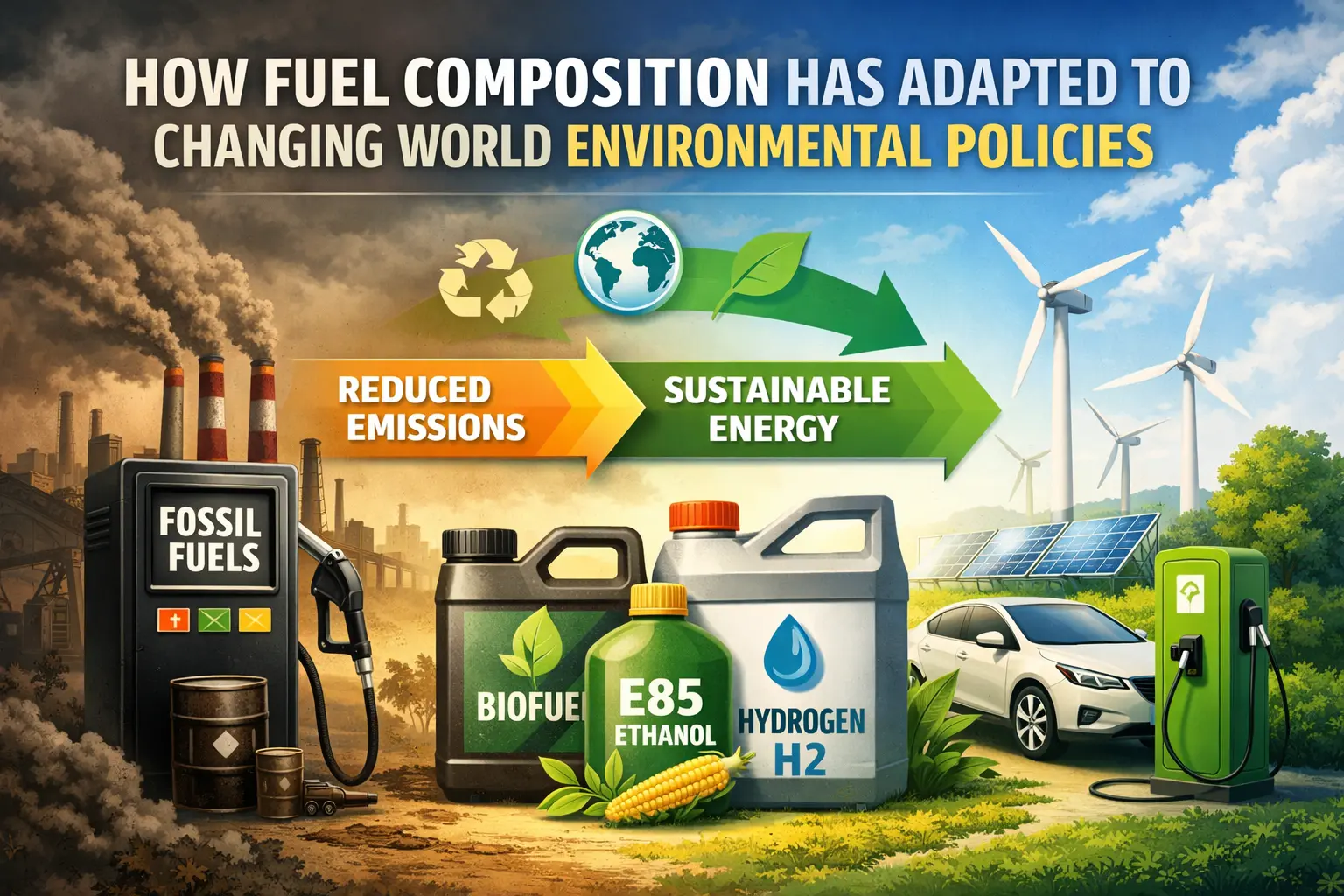
Fuel technology has evolved through history, with petrol and diesel seeing significant changes via new formulas, advanced compounds, and refined fuel composition designed to reduce impact while balancing cost and environmental reasons. The adoption of ecological blends like E10 petrol at UK fuel pumps in 2021 shows how fuel companies adapt to a changing world shaped by environmental policies. Understanding this formulas evolution helps drivers protect engine performance and improve mileage.
Table of Contents
What is Petrol and Why Is It Essential For Powering Our Cars?
Petrol is a fossil fuel and a by-product of crude oil, stored in vast underground reservoirs beneath land and beneath sea for millions of years, formed from decomposed organic matter.
Extracting oil is a time intensive process requiring labour intensive processes and powerful drilling machines that penetrate below the surface to access Earth’s fossil fuel reserves.
Since the Industrial Revolution in the 18th century, coal was the primary fossil fuel for powering factories, heavy machinery, and fuelling vehicles like boats and trains, until petrol emerged in the turn of the 20th century.
The merits of petrol became clear with the earliest versions of the car rolling off the production line, delivering power to accelerate over reasonable distances. Initial experiments with coal powered electric motors gave way to the combustion engine, designed to burn petrol to generate power, with rich minerals making it energy dense and ideal for powering cars, trucks, submarines, and military vehicles.
The petrol engine was a huge success, with millions of cars sold, becoming the go to fuel.
Yet, in the early days, the harmful effects of burning fossil fuel became apparent, as petroleum products burned released toxic gases like carbon dioxide, carbon monoxide, hydrocarbons, heavy metals, and lead, contributing to air pollution, climate impact, greenhouse gas emissions, and global warming. Over time, governments, energy companies, and environmental campaigners after WWII pushed research for less damaging solutions, leading fuel companies to develop safer and environmentally friendlier fuels.
From my experience tuning engines and testing fuels, I’ve seen firsthand how even slight adjustments in petrol quality can transform performance and efficiency, making every vehicle drive smoother while minimizing environmental impact. Smart fuel choices combined with proper additives have always proven essential in extending engine life and maintaining consistent power.
How Has Petrol Changed to Make it Better for the Environment?
In Japan, the introduction of leaded petrol in the early 1900s created a huge boom for the future of the car, driving carmakers to produce millions of models over the next 50 years to satisfy an eager public keen on owning a car, yet the harmful effects of burning petrol soon became apparent.
This led scientists to begin researching ways to inhibit harmful effects, ultimately resulting in the development of a new type of fuel, unleaded petrol, in 1972, marking a pivotal shift toward a cleaner environment while maintaining power cars and engine performance.
From my experience working with both classic and modern engines, witnessing the transition from leaded to unleaded petrol highlighted how strategic fuel changes can dramatically reduce environmental impact while sustaining engine efficiency and smooth power delivery.
Unleaded Petrol
The introduction of unleaded petrol marked a huge shift in fuel composition, making petrol kinder to the environment by removing lead compounds and creating a safer option that reduced air pollution while still supporting octane rating to aid performance and protect valve seals.
Its immediate success was gradual, with slow uptake across countries and regions, including Japan and the UK, where it went on sale in June 1986 at select filling stations. Government tax legislation helped replace leaded fuel, making it expensive compared to the new type of petrol, and the adoption of new cars running on unleaded fuel set the future of driving on a cleaner path.
By 2000, the EU banned the sale of leaded petrol, completing the shift, though drivers with cars built before 1990s still relied on lead replacement products to mirror effects, maintain and lubricate older parts like valve seals.
From my experience testing engines during this transition, I’ve seen firsthand how unleaded petrol not only improved overall engine performance but also reduced wear on critical components, proving that cleaner fuel can go hand in hand with reliability and long-term efficiency.
Biofuels and Ethanol
The addition of ethanol added to petrol has played a crucial role in curbing air pollution while maintaining energy density and combustibility, as a natural compound produced through natural fermentation of sugars, initially used in small quantities during winter to help with car starting problems.
Over time, fuel companies began using higher quantities to reduce harmful effects of burning straight petrol, supported by the UK government through law and biofuels policies like the Renewable Transport Fuel Obligation Act (RTFO).
These policies gradually implemented percentile stages of 5% biofuel, 25% biofuel, and beyond, allowing the amount of ethanol in petrol and diesel to continue to rise steadily.
Today, 10% bioethanol petrol (E10) is the standard fuel at UK filling stations, establishing a benchmark in ecological petrol with a blend of unleaded petrol and bioethanol, providing a cleaner alternative to previous versions.
Despite the planned introduction, there was controversy over the high percentage, potential impact on compatible components, and possible wear quicker due to corrosiveness, making some drivers reluctant to adopt it immediately.
Modern fuels continue to change and evolve under consumer demands and government regulations, introducing a new type of fuel designed to balance performance, sustainability, and long-term engine longevity.
From my hands-on experience testing vehicles with both older and newer blends, I’ve observed how careful management of ethanol content can optimize engine performance, reduce emissions, and maintain components without accelerated wear, proving that biofuels are both practical and environmentally responsible.
Conclusion
Fuel additives, along with unleaded petrol and bioethanol, enhance engine performance, boost mileage, reduce harmful effects on the environment, and ensure cleaner, more efficient, and durable operation for all vehicles.
FAQS
What is fuel composition?
The fuel elements mainly consist of carbon, hydrogen, oxygen and sulfur and the content of each of these elements determines fuel composition. Fuel structure will be determined by its bond structure, location, and type of bond making up the molecules in the fuels.