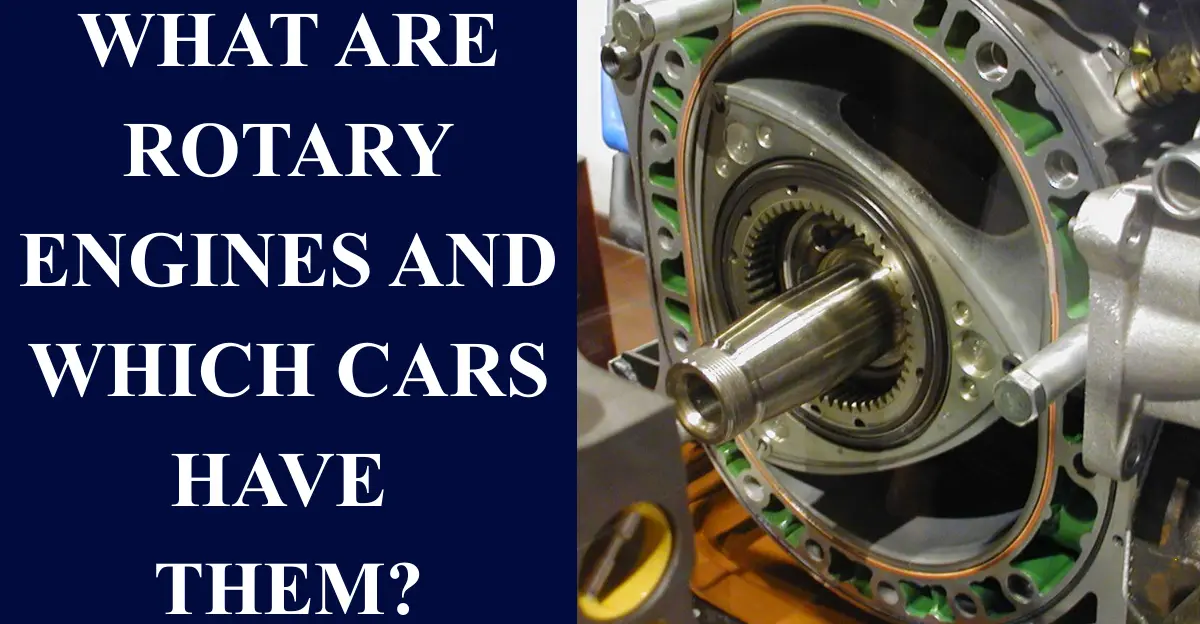
Rotary engines represent a distinctive phase in automotive history, defined by unique engine architecture, mechanical simplicity, and an important role in powertrain evolution before being replaced due to cost and emissions concerns. Recent news around Mazda developing a new rotary engine for hybrid technology has renewed interest in this bygone era within the automotive industry.
Explore how this type of engine works, understand its efficiency and engineering design, and discover the cars that run on it to see why a modern comeback now feels more relevant than ever.
Table of Contents
What is Rotary Engine?
An internal combustion engine like a rotary engine has powered cars, boats, planes, trucks, and other vehicles for decades, and it was once widely used among early engine types dating back to the 1920s to power a vehicle differently from a conventional piston engine found in standard engines.
Instead of pistons, this design performs the same four jobs of intake, compression, combustion, and exhaust through a continuous combustion cycle that works step by step as air enters through an intake valve or intake port into an interior chamber formed by a triangular shaped rotor inside a sealed chamber with gas tight seals.
As the rotor spins with its unique shape, different volumes of gas expand and contract, drawing in air and fuel into the system, where peak pressure builds inside separated gas chambers until the fuel air mix is ignited, producing power that transfers power to the drivetrain through the output shaft.
This entire process happens within the engine housing, where burned gases exit through the exhaust port, are emitted from the tailpipe, and controlled temperature is maintained by a cooling system using coolant passageways around the outside shell and combustion housing, while oil circulates to keep lubricating all moving parts without traditional valves slowing the motion.
From my hands-on experience working around rotary powered cars, I have seen how their smooth delivery, compact design, and continuous power output make them feel very different from a normal engine, and learning to maintain their seals and cooling system taught me the level of precision and care needed to keep them running efficiently.
What Are Rotary Engines and Which Cars Have Them?
Rotor
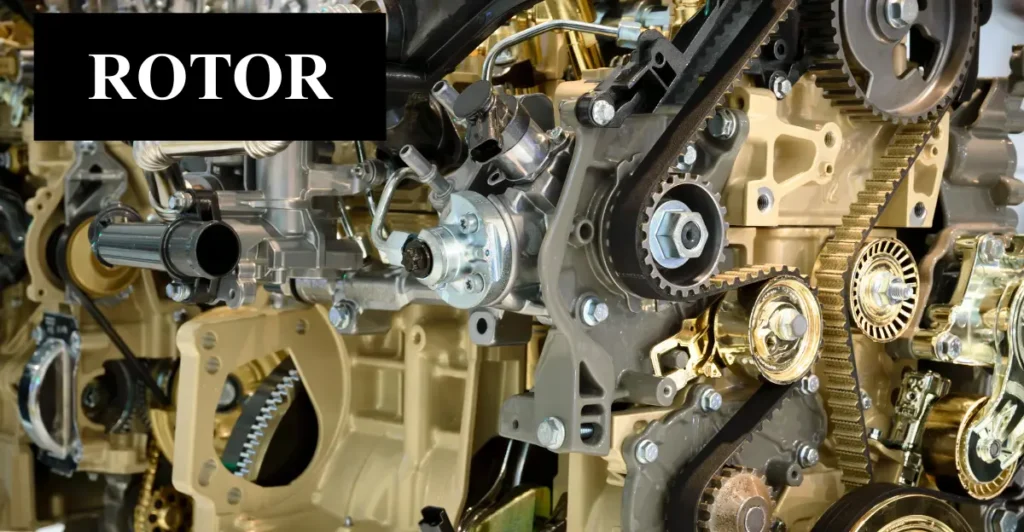
The rotor is a three sided component with concave sides that maintains a gas tight seal against the housing. Each face forms an inlet or pocket that allows a greater volume of gas to pass through, increasing the engine displacement rate as it spins on gears connected to the shaft at the centre of the housing. Its edge stays in contact with the housing, creating three individual combustion pockets that follow a spirograph pattern with slightly offset motion.
Housing
The housing is the main body of the rotary engine and has an oval shape to maximise displacement while ensuring the rotor spin remains in constant contact with the inner wall. It guides gas pockets through the combustion cycle of intake, compression, combustion, and exhaust and accommodates spark plugs, fuel injectors, and channels for oil and coolant to maintain system integrity and temperature according to the rotary engine blueprint.
Output Shaft
The output shaft transfers energy from compression and combustion to the drivetrain, delivering power to the wheels through a shaft mounted with round lobes that stay in contact with the rotor, allowing smooth shaft spin and consistent power output throughout the engine.
Working with rotary engines, I have observed that the precise fit of the rotor, housing, and output shaft is essential for efficiency and smooth operation, and maintaining correct alignment ensures reliable power delivery and long-term durability.
Are There Any Benefits to Rotary Engines in Cars?

Rotary engines are a rare choice for car manufacturers compared to the conventional piston engine that has dominated since the 1920s onwards.
While they may be less economical and show lower thermodynamic efficiency due to combustion chamber size and a low compression ratio when compared to their piston counterparts, they still offer notable benefits on the road.
The movement of pistons in traditional engines is fast and intense, requiring counterweights and complex systems to manage vibration and wear, whereas the single movement of a rotor in one direction produces a smoother action, quieter feel, and refined feel.
With fewer moving parts, less strain on internal parts, and slower internal movement, rotary engines provide smooth performance, easier maintenance, and improved long term reliability, making them a compelling, though unconventional, option to power the car.
From my experience working with rotary-powered vehicles, I’ve found that despite higher upkeep costs and specialized maintenance, the smooth and quiet operation combined with the long term reliability of fewer moving parts makes these engines uniquely enjoyable for enthusiasts who value performance and refinement.
Which Cars Have a Rotary Engine?

The rotary engine has a storied history, first experimented with by car makers in the 1960s, achieving its first success in 1967 with the Cosmo Coupé from a Japanese car brand, Mazda.
Over the decades, rotary engined cars became renowned for efficient, ultra smooth, and refined performance, with iconic models like the RX 7, RX 8, and even the Mazda 2 rotary version launched 2013 from the Mazda garage.
While modern cars predominantly use piston powered engines due to economy, manufacturing expense, and stricter Emission Standard legislation, Mazda has announced plans to build a new rotary engine as an electric motor range extender for hybrid electric vehicles, believing the rotary unit is a perfect match for hybrid cars.
With longer air intake period, efficient mixing of air and fuel, and handling higher quantities of fuel air mix, the new generation rotary powered models aim at improving efficiency, performance, and innovation, while offering the sound performance, reliable performance, and refinement unmatched by a standard piston engine, and designed to run on next generation fuels like hydrogen.
From my experience following Mazda’s rotary lineage, these cars always stood out for their unique sound, smooth and reliable performance, and engineering elegance, and the new hybrid approach shows how the rotary engine continues to inspire innovation.
Conclusion
Rotary engines remain one of the most unique and innovative powertrain solutions in automotive history, offering smooth performance, refined feel, and reliable power unmatched by conventional engines. From iconic Mazda RX 7 and RX 8 models to upcoming hybrid rotary-powered vehicles, their comeback highlights ongoing innovation in engine design and efficiency. Explore the world of rotary engines today and discover which cars deliver this extraordinary driving experience.
FAQS
Which cars use rotary engines?
A: Many classic cars featured the rotary engine, a compact and high-revving design by Felix Wankel. Notable examples include the Alfa Romeo Spider/1750, AMC Pacer, Chevrolet Aerovette, Chevrolet Monza, Chevrolet Vega, and Citroën GS Birotor. These rotary-engined classic cars stood out for their innovative design, lightweight construction, and smooth, high-revving performance.
What’s so special about rotary engines?
A rotary engine has fewer moving parts than a piston engine, which can lead to improved reliability and reduced maintenance costs. The rotary engine’s compact size and high power-to-weight ratio make it an attractive option for sports cars and other performance-oriented vehicles.