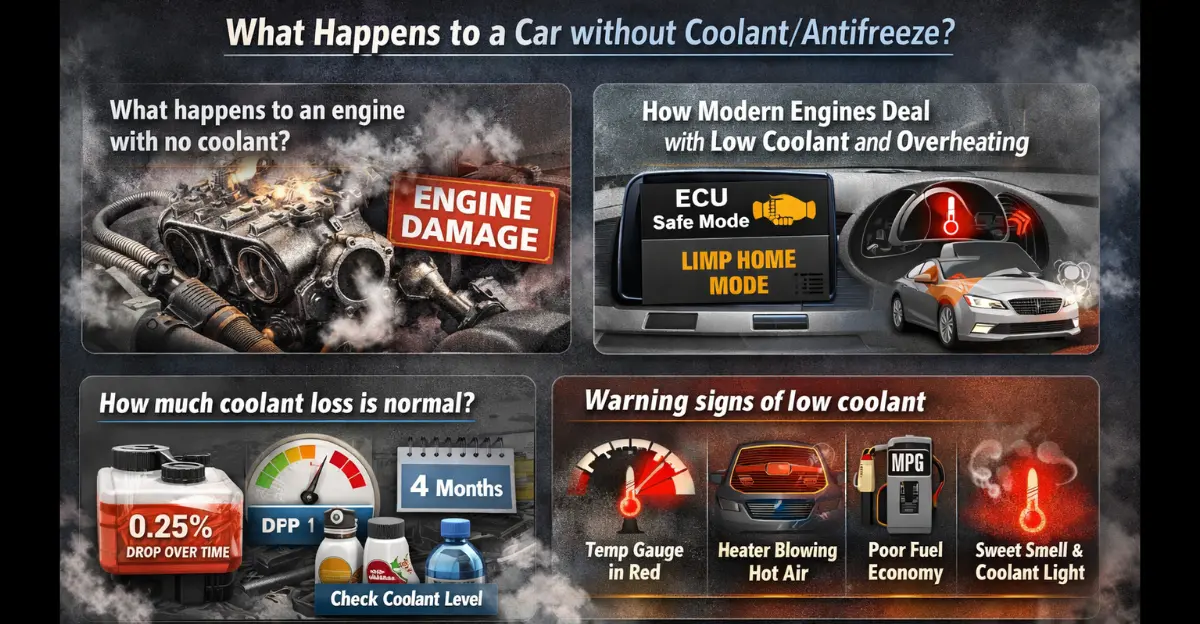
Driving a car without Coolant or antifreeze quickly damages the engine and disrupts the system responsible for maintaining temperature and preventing overheating. Even minor coolant loss or a low coolant level triggers the warning light on the dashboard, putting safe driving at risk.
Regularly checking under the bonnet and addressing low coolant ensures your car runs smoothly and avoids costly repairs. Taking action early protects your engine, supports day to day use, and keeps your vehicle safe on every drive.
Table of Contents
What happens to an engine with no coolant?
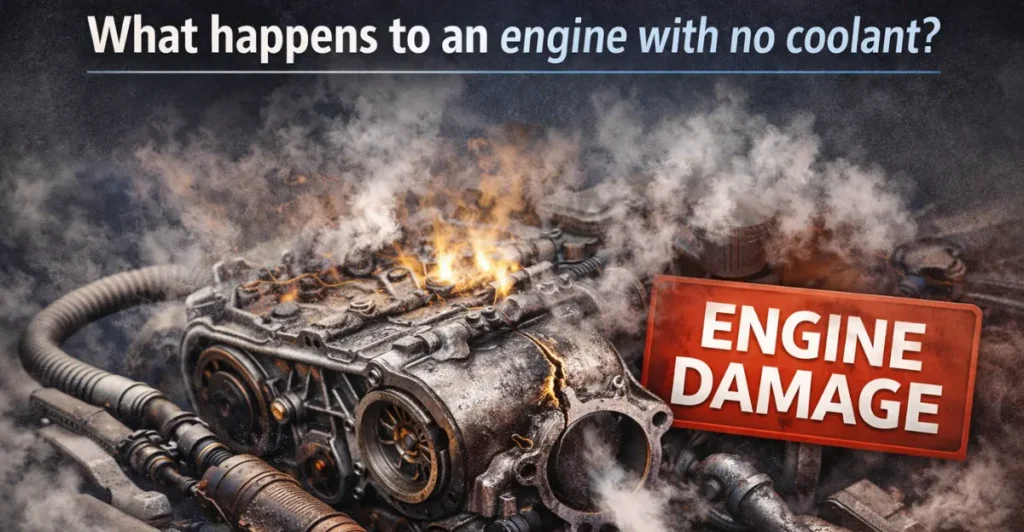
When coolant or antifreeze stops circulating, the engine loses its ability to stay at the correct working temperature, causing components to expand and wear faster. If the car runs out of this essential fluid while on the road, overheating starts immediately.
Maintaining safe operation becomes impossible without proper coolant, and even short drives in this state can severely damage the engine. In my experience, even brief drives without coolant can warp metal parts and stress the engine, making prevention critical.
Dashboard warning light or abnormal temperature gauge
A dashboard warning light or abnormal temperature gauge is often the first sign of low coolant, showing a rising temperature gauge, a red symbol, or a thermometer icon that may flash or stay steady depending on the type of fault. At this stage, pull over and check the temperature gauge immediately to avoid driving past safe limits and exceeding the recommended temperature.
Automatic engine cut-off
Many modern cars come with an automatic engine cut-off designed to prevent damage if engine heat up occurs due to lack of coolant. This feature stops the car from letting you drive further until the engine has cooled down, protecting vital components and reducing the risk of costly failures.
Damage to engine parts
If you continue driving with low coolant, the risk of damaging parts rises sharply, with running too hot leading to pricey repair bills or even permanent damage. Critical engine parts like the water pump, head gasket, cylinder, piston timing, cylinder head, and connector rods can warp or bend, sometimes resulting in irreparable damage or total overheating failure.
Other symptoms of low or no coolant
Additional signs of mechanical engine issues include billowing steam, a dangerously hot bonnet, or no control over the interior heating system. Pulling over immediately can prevent more damage and avoid a complete breakdown caused by low coolant or no coolant.
In my experience, cars with automatic cut-offs give a small safety window, but ignoring early dashboard warnings almost always leads to serious engine repairs. Checking coolant regularly under the bonnet has saved more engines than any emergency fix I’ve seen on the road.
How Modern Engines Deal with Low Coolant and Overheating
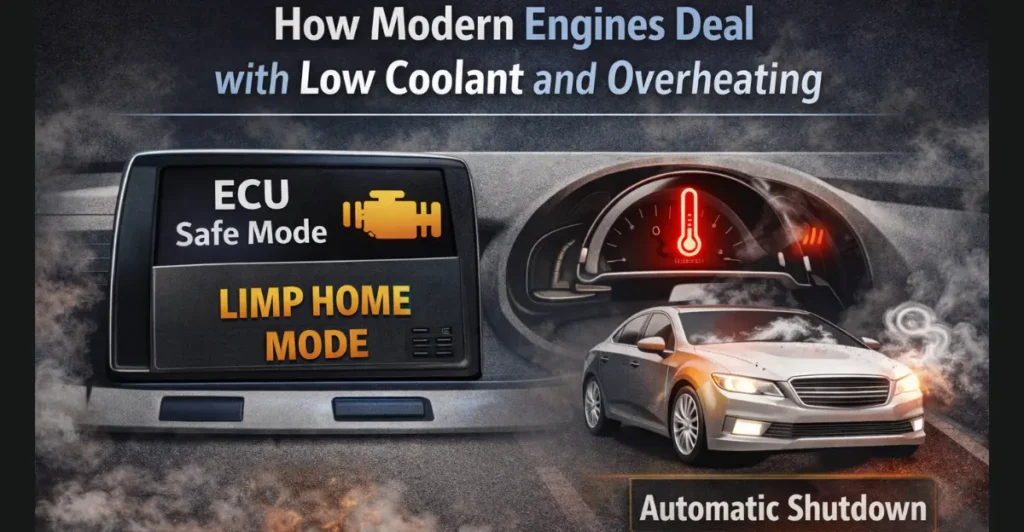
Modern engines handle low coolant and overheating much more intelligently than older models. In modern high end cars, the engine control unit (ECU) can detect when coolant or antifreeze levels are low. It adjusts firing cylinders in a different sequence and directs cool air through the inlet or bank of cylinders to help the engine cool slightly, reducing the risk of immediate failure.
Many new cars enter a safe mode or limp home mode, which reduces power while allowing driving further without causing instant damage. This mode works alongside features like the automatic cut off, which kills power when temperature reaches a certain point, preventing heat damage to critical engine parts.
The cooling system thermostat and other safeguards are designed for damage prevention, letting you get home or reach a garage safely. These systems allow the car to restart once it has cooled down sufficiently, ensuring continued safe operation.
From my experience, relying on these ECU-driven protections has saved many engines from catastrophic failure, but repeatedly ignoring proper coolant levels eventually results in expensive repairs.
How much coolant loss is normal?
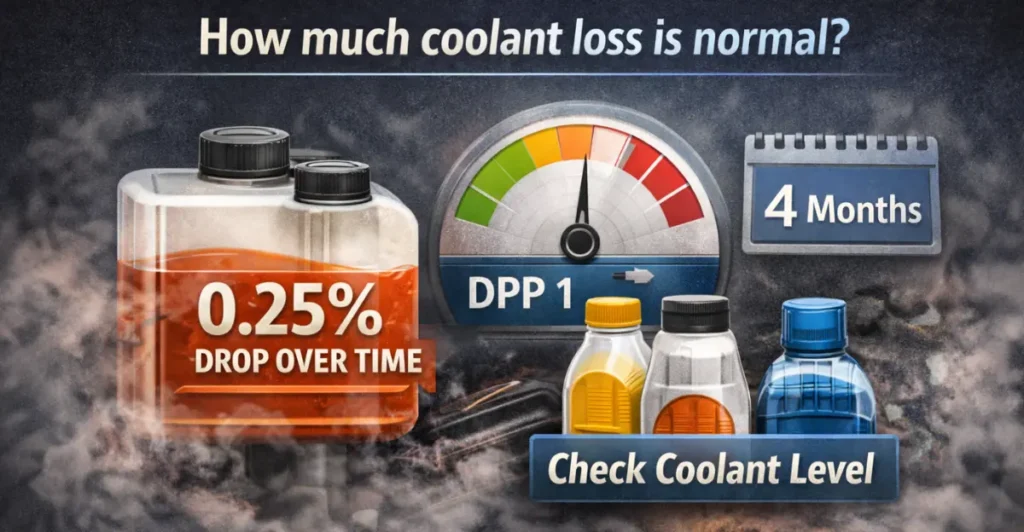
Coolant loss is normal over time, as minor evaporation from the reservoir or cooling system occurs during day to day use.
An acceptable loss is usually an average drop of around 0.25% over four months under normal conditions, and small fluctuations are expected due to prolonged exposure or extreme temperatures.
Over a five year cycle or even a ten year cycle, accumulated losses can happen naturally, but presence of faults may accelerate the drop. It is crucial to continuously check the coolant level and condition, being aware of car coolant naturally occurring losses versus fault related losses, to ensure safe operation and prevent overheating.
In my experience, routinely monitoring the reservoir and topping up when necessary has prevented small coolant loss from escalating into serious engine issues, and maintaining awareness of both natural and fault-related drops has saved costly repairs on multiple cars I’ve worked on.
Warning signs of low coolant
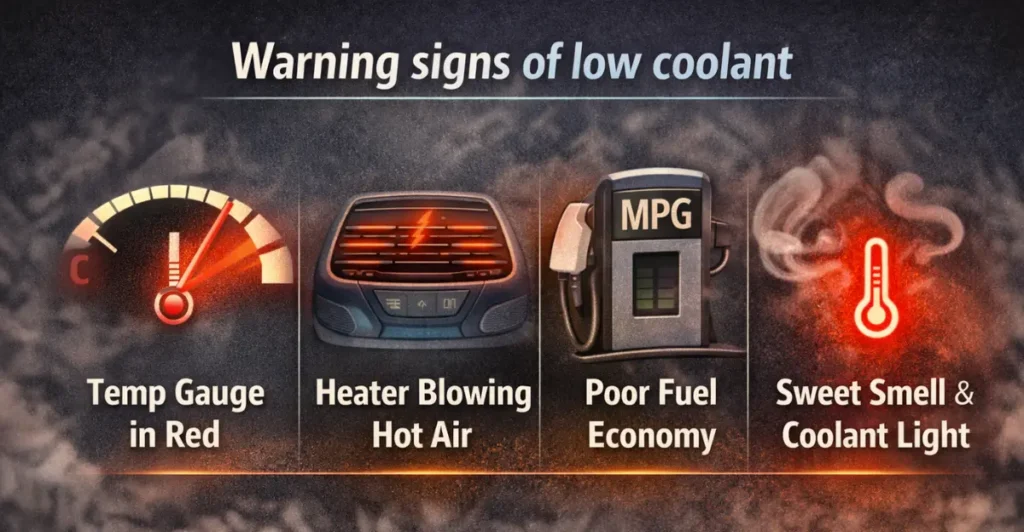
Recognizing warning signs of low coolant is essential to prevent car engine heat damage. Ignoring a cuts out scenario caused by a cooling system fault can lead to costly repairs.
Observing your dashboard warning light, checking the age and condition of coolant, and knowing common warning signs helps the engine sustain damage avoidance.
High-temperature gauge creeping towards the red
A high temperature gauge creeping towards the red is often the first indicator that something is wrong with the cooling system. Watch the needle on the temperature gauge, as it moving unexpectedly requires immediate attention.
If the gauge rises, pull over, pop the bonnet, and allow the cool engine to prevent further sustains damage. Causes can range from a leaf blocking radiator air intake to a serious coolant leak, making diagnosing the problem immediately crucial.
Heater not working or blowing constant hot air
If the heater is not working or blowing constant hot air, it signals that residual heat collected from the engine is not being managed by the cooling system. This issue can affect comfort and engine safety.
A fault in the internal heating system can result in complete lack of heat or an unpleasant constant flow even on the cold setting, indicating a larger problem beneath the bonnet.
Poor fuel economy
Poor fuel economy often occurs when the engine runs at the right temperature but fluctuating engine temperature changes prevent it from burning effectively, reducing low consumption. This impacts both efficiency and emissions.
Consequently, this leads to increasing emissions in the exhaust and a dip in recorded MPG, so always check coolant level and watch the temperature gauge for early signs of overheating.
A sweet smell
A sweet smell inside the cabin is usually coolant or antifreeze leaking from the cooling system, creating a distinct odour when the engine is hot. Immediate attention is required.
Detecting this engine fluid odour early helps diagnose problems quickly before they cause significant damage.
Coolant dashboard light
The coolant dashboard light or engine coolant light with a thermometer symbol or a series of wavy lines illuminated in red indicates the temperature limit has been exceeded. Immediate action is necessary.
Pull over immediately to prevent further engine damage and allow the car to cool down.
In my experience, early recognition of these warning signs, from a creeping temperature gauge to a sweet smell, has saved engines from costly repairs, and even routine observation of the dashboard light often prevents irreversible damage on cars I’ve serviced.
Conclusion
Monitoring coolant levels and responding to early warning signs like a dashboard light, high temperature gauge, or sweet smell protects your car engine from costly heat damage. Regular checks of the cooling system and heater keep your car running efficiently and prevent unexpected breakdowns. Stay proactive, top up coolant when needed, and maintain your engine for reliable performance on every drive.
FAQS
What are the first signs of low coolant?
Early symptoms of low coolant include a dashboard warning light, a temperature gauge rising above normal, or poor heat from the cabin vents. As coolant levels drop further, you may notice visible steam, bubbling sounds, or a sweet chemical smell signs that your engine is beginning to overheat.
Can I still drive my car if my coolant is low?
Driving with low coolant can quickly cause your engine to overheat, which may lead to warped engine components or a blown head gasket. In some cases, even a short drive can cause damage, especially if you’re in stop-and-go traffic or hot weather.