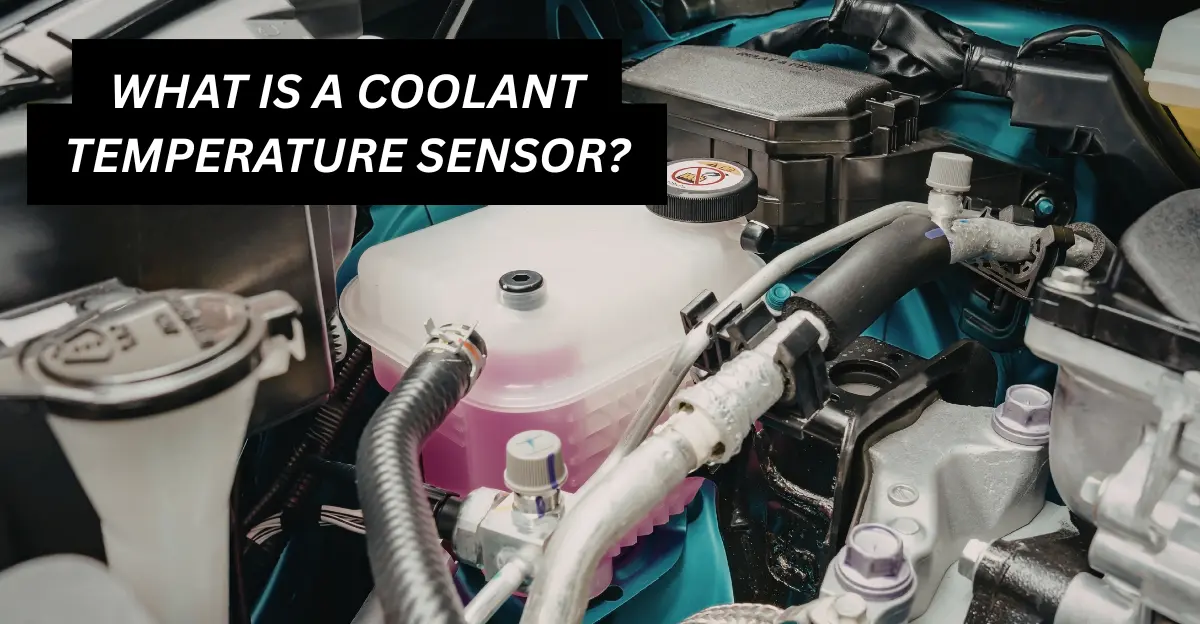
A Coolant Temperature Sensor is essential for maintaining the optimum temperature of your engine, allowing cooling systems to regulate coolant and antifreeze flow while the vehicle is operating at the right temperature. These coolant temperature sensors deliver real time information to the driver, helping prevent damage and performance loss caused by a faulty sensor.
Understanding how they work gives you a practical guide for diagnosing issues and replacing components step by step when needed. Follow expert advice, strengthen what you already know, and keep your engine running efficiently and reliably.
Table of Contents
What is a Coolant Temperature Sensor and How Does It Work?

The coolant temperature sensor, also called CTS, ECT sensor, ECTS, or engine coolant temperature sensor, is designed to measure the temperature of the coolant and antifreeze mix flowing through the cooling system.
It provides a precise indication of heat inside the engine, allowing the sensor to continually report conditions while the vehicle is running.
The vehicle ECU uses a regulated voltage where resistance varies with temperature changes, giving an accurate reading of the current engine temperature. This information is then used to calculate fuel injection, adjust the fuel mix, refine ignition timing, and control when the electric cooling fan is switched on or switched off.
The live reading is also sent to the gauge on the dashboard, allowing the driver to monitor engine performance and ensure it stays at the optimum temperature.
From hands-on experience, I’ve seen that even slight deviations in sensor resistance can throw off timing and fuel delivery, and replacing a worn sensor quickly restores smooth running.
How to Spot a Faulty Coolant Temperature Sensor
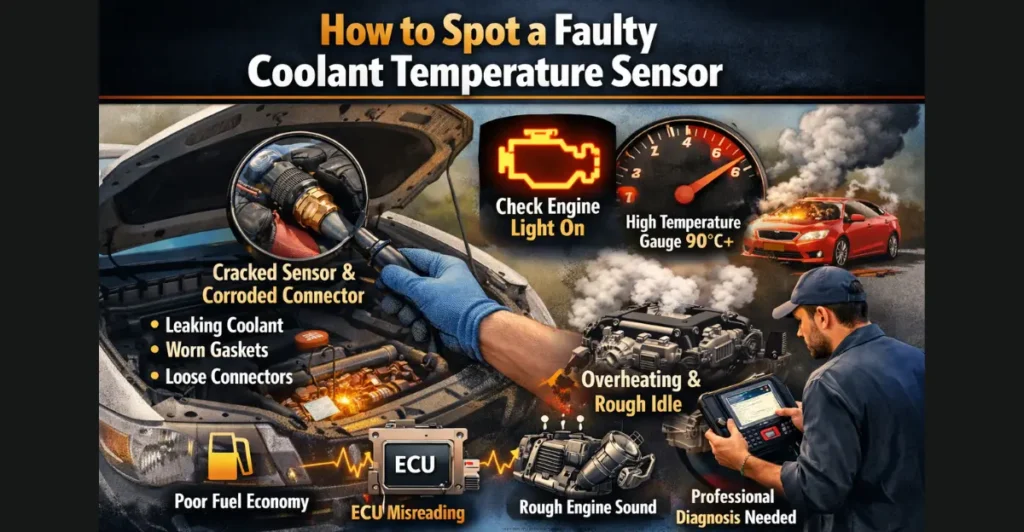
Identifying a faulty coolant temperature sensor begins with inspecting the component under the bonnet, paying close attention to the CTS and other coolant temperature sensors located near the thermostat housing and radiator.
Faults often develop from:
- Extended use
- Continual temperature cycling
- Worn gaskets and connectors, which may have cracks that cause inaccurate readings
A failing temperature sensor can trigger a range of problems, including:
- Overheating
- Poor engine performance
- Rough engine sound
- Erratic idling
- Limited performance caused by the ECU miscalculating fuel rich mixture, affecting fuel economy
Visible symptoms include:
- Irregular reading on the dashboard gauge
- Engine temperature staying above 88 to 90°C once the engine warmed up
- Check Engine Light alert
While a visual check can reveal a component faulty or damaged sensors, a professional mechanic should perform a complete diagnosis to prevent further problems and expensive to fix engine damage.
From personal experience, I’ve seen minor connector corrosion or a tiny crack in a sensor throw off readings, and early detection through careful inspection has repeatedly saved engines from costly overheating repairs.
How to Replace a Coolant Temperature Sensor
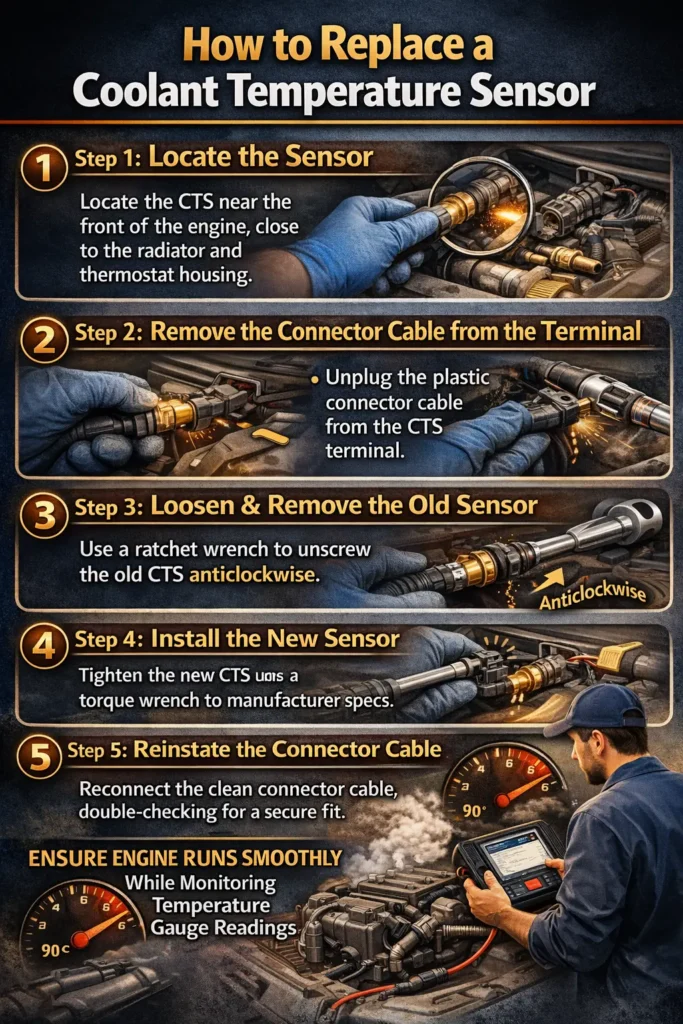
Replacing a coolant temperature sensor is a simple process once you are familiar with the components under the engine hood, and it ensures the drive remains smooth by addressing a faulty coolant temperature sensor promptly. The steps begin with locating, disconnecting, removing, and changing the sensor in your car carefully to avoid damage and maintain optimal engine performance.
Step 1: Locate the Sensor
First, locate the sensor or CTS, usually at the front of the engine near the radiator or thermostat housing. This small component sits within the engine bay, and using a light or torch while removing the engine cover makes it easier to see.
Step 2: Remove the Connector Cable from the Terminal
Next, remove the connector cable from the terminal linked to the ECU. Carefully unfasten the plastic connector, checking the wiring for brittleness. Disconnect the cable and place it safely aside for later replacing.
Step 3: Loosen and Remove the Old Sensor
To loosen and remove the old sensor, use a deep socket and ratchet, turning in an anticlockwise direction. For stuck sensors, a pressure release spray can help, and unscrewing carefully prevents coolant leak. Keep spark plug proximity in mind and drain coolant as necessary before removing the old coolant sensor to make room for the new one.
Step 4: Install the New Sensor
When you install the new sensor, wipe the area with a rag or cloth to remove dust and debris. Ensure the CTS threads twist clockwise, are well seated, and tightened using a torque wrench according to manufacturer instructions to maintain proper performance.
Step 5: Reinstate the Connector Cable
Finally, reinstate the connector cable, ensuring the clean connector and clips make a good connection with the terminal. Start the engine, allow it to warm, and monitor the temperature gauge on the dash to verify it reaches the correct temperature and maintains it sustained during operation.
From my experience working in workshops, I’ve found that carefully following these steps prevents minor mistakes like overtightening or improper connections, which can otherwise trigger false readings or coolant leaks, and it consistently restores the engine to smooth running.
Conclusion
Replacing a coolant temperature sensor keeps your engine at the optimum temperature and prevents overheating. Properly replacing and reconnecting the CTS helps the ECU manage fuel mix and ignition timing. Acting on a faulty coolant temperature sensor ensures your car runs efficiently and avoids costly repairs.