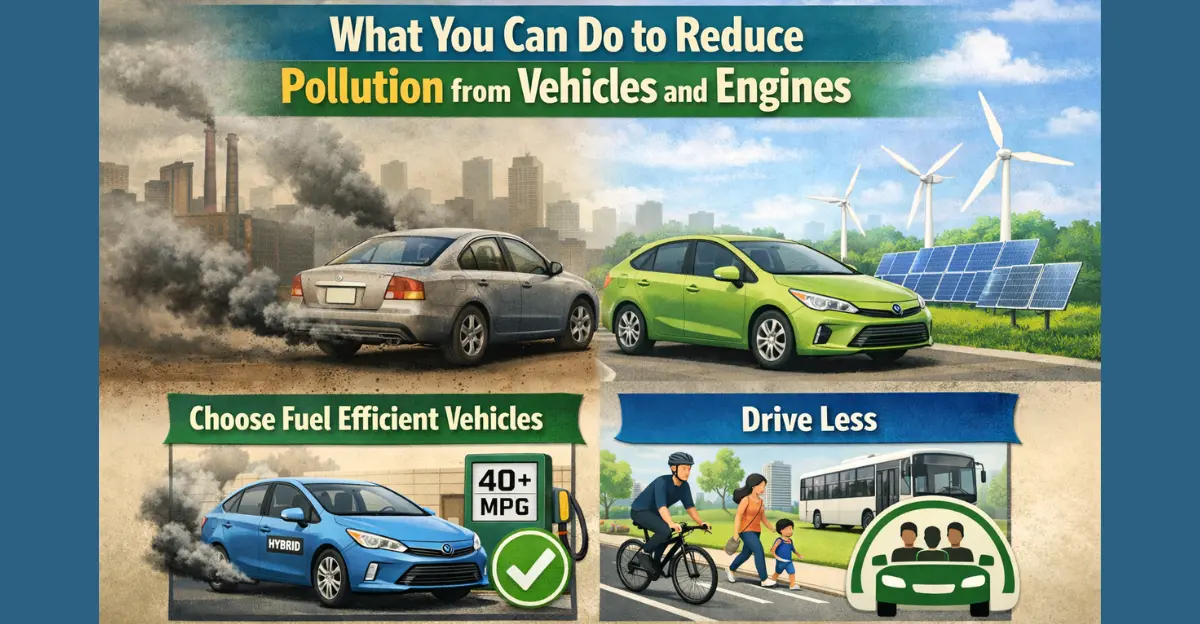
Taking steps to reduce pollution from vehicles and engines can significantly improve air quality and protect the environment. By adopting practices like driving efficiently, selecting fuel-efficient vehicles, and optimizing tasks such as home deliveries and gardening, you can lower emissions and save money. Implement these strategies today to make a positive impact and enhance sustainability in your daily life.
Table of Contents
Drive Less
Reducing how often a vehicle is used remains one of the most effective and immediately achievable ways to limit environmental impact. Small behavioral adjustments in daily mobility can collectively produce meaningful reductions in fuel consumption and overall emissions.
- Plan daily trips to avoid unnecessary miles and drive less overall.
- Combine errands like grocery runs and each visit to the store into a single chain.
- Choose to walk whenever possible to directly reduce vehicle emissions.
- Use a bike for short distances or rely on bike-share programs.
- Coordinate a carpool with friends or coworkers to ensure fewer cars are driven.
- Prefer public transit and ride-sharing options when commuting to work.
- Stay closer to home for tasks that do not require frequent driving.
- Adjust habits periodically to maintain lower fuel use and pollution over time.
- Focus on efficiency by minimizing unnecessary trips and driving decisions.
- Prioritize smarter mobility choices to consistently reduce environmental impact.
In my own routine, consolidating errands and reducing unnecessary driving noticeably lowered fuel usage within weeks. Over time, the reduced engine load also translated into smoother performance and less frequent maintenance needs.
Drive Wise
Being mindful of how you drive is one of the most practical ways to reduce emissions from vehicles, as small adjustments in driving style and maintenance can have a big environmental impact. Efficient driving not only benefits the planet but also lowers fuel costs and keeps your car running smoothly.
- Drive efficiently by staying smooth on the gas pedal and gentle with the brakes.
- Go easy on acceleration and maintain steady speeds to reduce emissions.
- Follow the manufacturer maintenance schedule to ensure your car runs optimally.
- Perform regular tune-ups and use the recommended motor oil for better engine efficiency.
- Proper upkeep helps vehicles operate safely and consistently, lowering fuel costs.
- Smart driving habits not only save money but also minimize environmental impact every time you drive.
In my experience, adopting smooth throttle control and sticking to maintenance schedules quickly improves engine efficiency and reduces exhaust output. Even small changes in how you drive can make a noticeable difference over time.
Choose Fuel Efficient Vehicles
Selecting fuel efficient vehicles is one of the most effective ways to lower fuel costs while cutting low greenhouse gas emissions, making a tangible difference for the environment and long-term savings. Being informed and comparing options ensures you pick a vehicle that balances performance, efficiency, and eco-friendliness.
- When shopping for a new car, prioritize electric vehicles, plug-in hybrid electric vehicles, or hydrogen fuel cell vehicles.
- Consider cleaner burning gasoline vehicles as another less polluting option.
- Use the Green Vehicle Guide and Fuel Economy and Environment Label to compare vehicle models.
- Choose an environmentally friendly vehicle that maximizes efficiency and reduces emissions.
- Rely on EPA and DOE information to make smart decisions about vehicles.
- Prioritize efficient models to ensure long-term saving money and environmental impact.
In my experience, consulting EPA and DOE resources while shopping made it easy to pick a fuel efficient vehicle that cut my fuel costs and significantly reduced emissions. The difference in efficiency and cleaner performance was noticeable immediately.
Don’t Idle
Reducing unnecessary idling is an easy and practical way to save money, lower fuel consumption, and protect air quality for everyone in your community. Even short periods of idling in cars, trucks, or school buses contribute to pollutes the air and excess engine wear, making it important to be mindful every time you turn on the engine.
- Avoid unnecessary idling in cars, trucks, and school buses to reduce greenhouse gas emissions.
- Modern vehicles don’t require long warming up in winter; start driving when ready to drive.
- Minimize exposure of children and the community to diesel exhaust from diesel school buses.
- Programs like the Clean School Bus Program provide information and resources to support reducing idling.
- Cutting idling saves money on fuel while reducing environmental impact.
In my experience, actively stopping idling in both personal vehicles and fleet trucks immediately lowered fuel usage and reduced engine strain. The improvement in local air quality was noticeable, especially around schools during drop-off times.
Optimize Home Deliveries
Efficient home deliveries are an easy and practical way to avoid extra trips and reduce emissions from delivery trucks, while still enjoying the convenience of shopping online. Planning ahead and making thoughtful choices can significantly lower your environmental footprint.
- Consolidate packages into one shipment whenever possible.
- Choose scheduled home deliveries to help carriers optimize routes.
- Opt for minimal packaging to reduce waste and improve efficiency.
- Select delivery options with flexible timing and longer time windows.
- Reduce the frequency of individual orders to avoid extra trips and save fuel.
From my experience, combining multiple online shopping orders into a single shipment and selecting flexible delivery times noticeably reduced the number of delivery trips in my area. This simple habit not only saved fuel but also made deliveries more predictable and efficient.
Use Efficient Lawn and Gardening Equipment
Using efficient lawn and garden equipment is an effective way to reduce impact on the environment and minimize pollutants from gas-powered engines, while keeping your landscaping tasks effective and quieter. Choosing the right equipment and maintaining it properly ensures both efficiency and sustainability.
- For small lawns, consider a manual reel mower or battery-powered machines that pollute less.
- Invest in electric machines or mowers with new technologies like catalysts, electronic fuel injection, and advanced emissions reduction technologies for commercial grade landscaping machinery.
- Properly maintain your equipment by performing tune mowers and change the oil regularly.
- Prioritize environmentally friendly products when shopping for garden tools.
- Using updated equipment reduces less pollution and improves the efficiency of outdoor work.
In my experience, switching to electric machines for my garden drastically lowered local exhaust fumes and made lawn work noticeably quieter. Regular maintenance and choosing advanced products with emission controls further reduced environmental impact and prolonged equipment life.
Conclusion
Implementing strategies to reduce pollution from vehicles and engines delivers cleaner air, lower fuel costs, and a healthier environment. Simple actions like driving efficiently, choosing fuel-efficient vehicles, and using eco-friendly gardening equipment create lasting benefits. Take charge today and start making smarter choices that protect the planet and save money.
FAQS
What You Can Do to Reduce Pollution from Vehicles and Engines
Drive less.
Drive wise.
Choose fuel efficient vehicles.
Don’t idle.
Optimize home deliveries.
Use efficient lawn and gardening equipment.